

My past company was spending $200,000 a month on ads, and when we finally got ruthless about ROI and attribution, we captured the same number of customers with one-tenth the budget. The spend seemed justifiable for each campaign, but it was just a vibe. When we broke out the math, the numbers did not add up.
The painful lesson was that invisible monthly waste compounded over six to twelve months into a very large sunk cost.
In 2026 we started rationalizing spend on tokens and saw the writing on the wall. Software had just walked through the door marketing opened a decade earlier.
The Squishy Era
For decades the per-feature cost of software was buried inside salary, so the value question never got asked cleanly. A fully-loaded engineer-quarter ran in the tens of thousands of dollars, but no roadmap document ever put that number next to an individual feature.
Killing a feature after three months was emotionally and politically expensive because it was an asset, not a line item. Someone had spent a quarter of their life on it, and admitting the work had not paid back meant admitting the team had bet wrong. The conversation rarely happened.
Marketing sat in exactly the same state before attribution. Big agency retainers, campaign vibes, and no data to cut against.
The Factory Gives Software a Marginal Cost
The software factory gives every feature a marginal cost.
Before the factory, a senior engineer ran $400,000 a year as a single undifferentiated line item. Now, every feature has its own price tag:
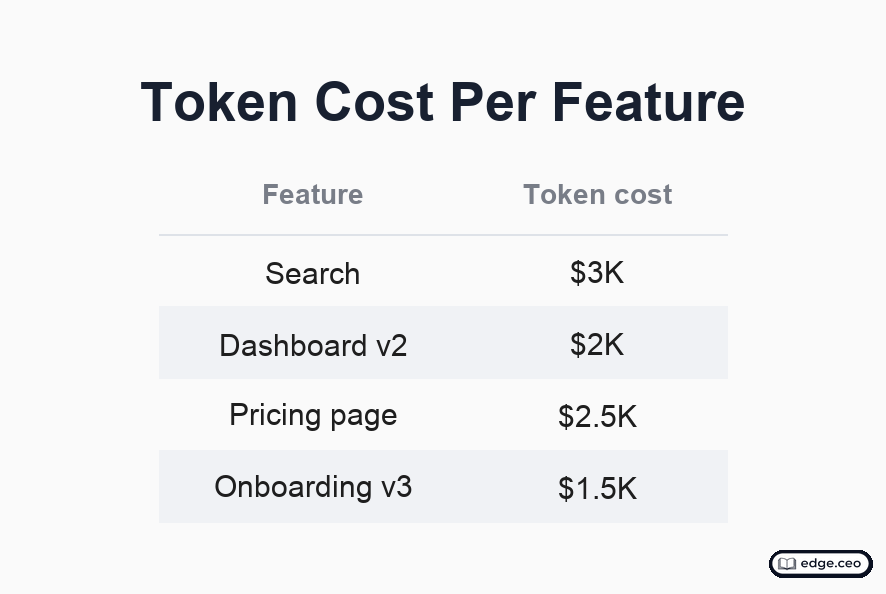
Shockingly, I have been writing over a million lines of code in the past few weeks. When the cost of each line collapses to almost nothing, the key question I keep asking myself is how much is it worth. For roughly $25,000 you can now build something feature-equivalent to HubSpot. That number would have been laughable for most of the last decade; today it is the going rate.
The operator instinct flips from asking what the team should work on this quarter to asking what this feature will return and how fast. A decade ago in marketing, attribution broke retainer-sized spend into line items. Each campaign acquired its own CAC and payback, and squishy agencies lost pricing power overnight.
CAC, LTV, Payback Per Feature
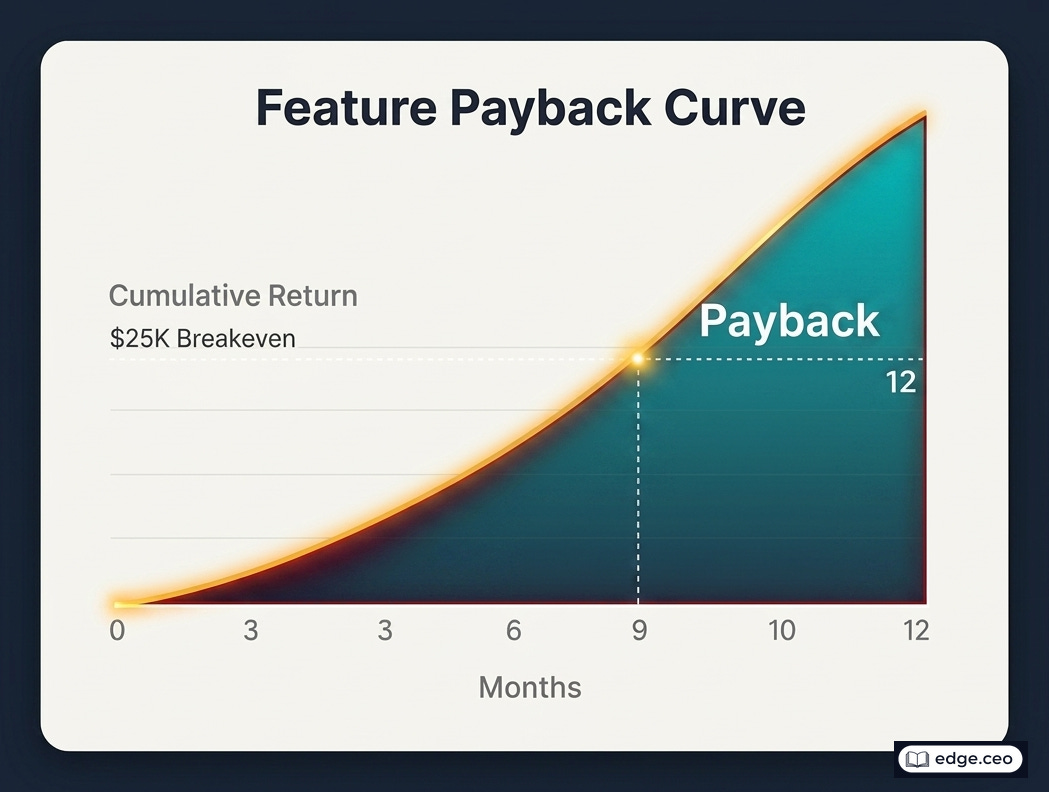
Once a feature has a dollar tag, it behaves like a marketing campaign, with a build cost, an expected return, and a payback period.
The build cost is the CAC analogue, running $25,000 for a full module and less for smaller features. The expected return is the LTV analogue: a retention lift on a $50,000 account, multiplied across a cohort.
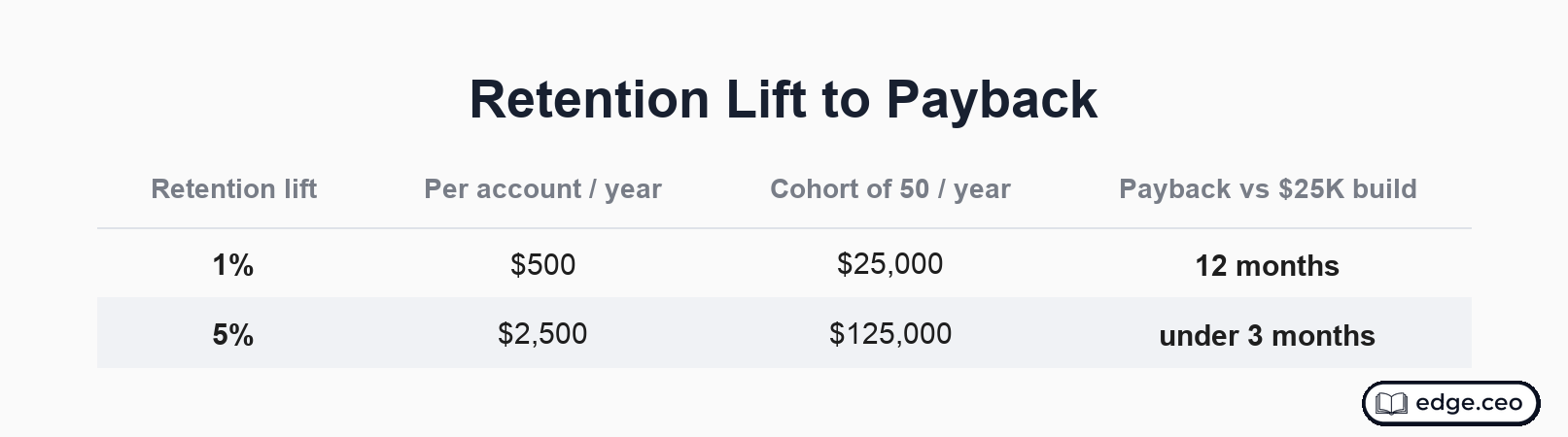
The payback period is sharp enough to decide against. Features that hit their payback stay, and features that miss get patched, repositioned, or sunset. Winners compound their lifetime value across every customer that touches them. Losers return zero.
Are you measuring value on features the way you measure it on ads? If not, you are running the squishy software factory and do not know it yet.
Hire an Engineer or Raise the Token Budget?
The marginal unit of capacity is now a choice between a headcount and a token budget.
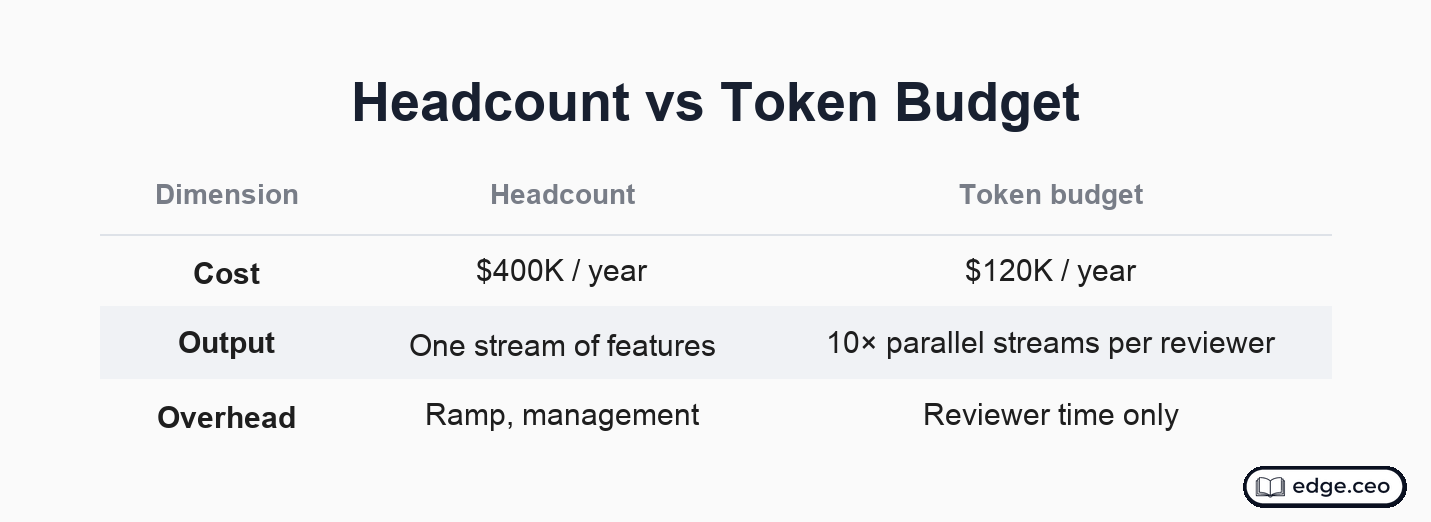
At early stage the old model does not pencil. A pre-seed company has no engineering-team budget, making the factory the only path. At scale, build cost stays flat while LTV scales with customer count, so the token-budget option dominates in both directions.
On the marketing side we learned to ask which dollar works. Asking it feature by feature produces the same step-function efficiency gain.
## Portfolio Manager Becomes the Primary Role
Product managers still own the roadmap, but portfolio management is now the primary frame. Historically, only Fortune-500 PMs needed this discipline. The factory compresses the career arc and drops it on a Series A PM instead.
The old primary job was specifying the next feature in detail. The new primary job is sizing the bets, measuring the returns, and deciding what stays and what gets cut. The skill set resembles a media buyer or growth lead more than a traditional PM, plus mathematical rigor and a willingness to sunset work that did not earn its place.
The operational artifact is a financial spreadsheet where every feature has a build cost, an expected return, and a decision to keep, patch, or sunset
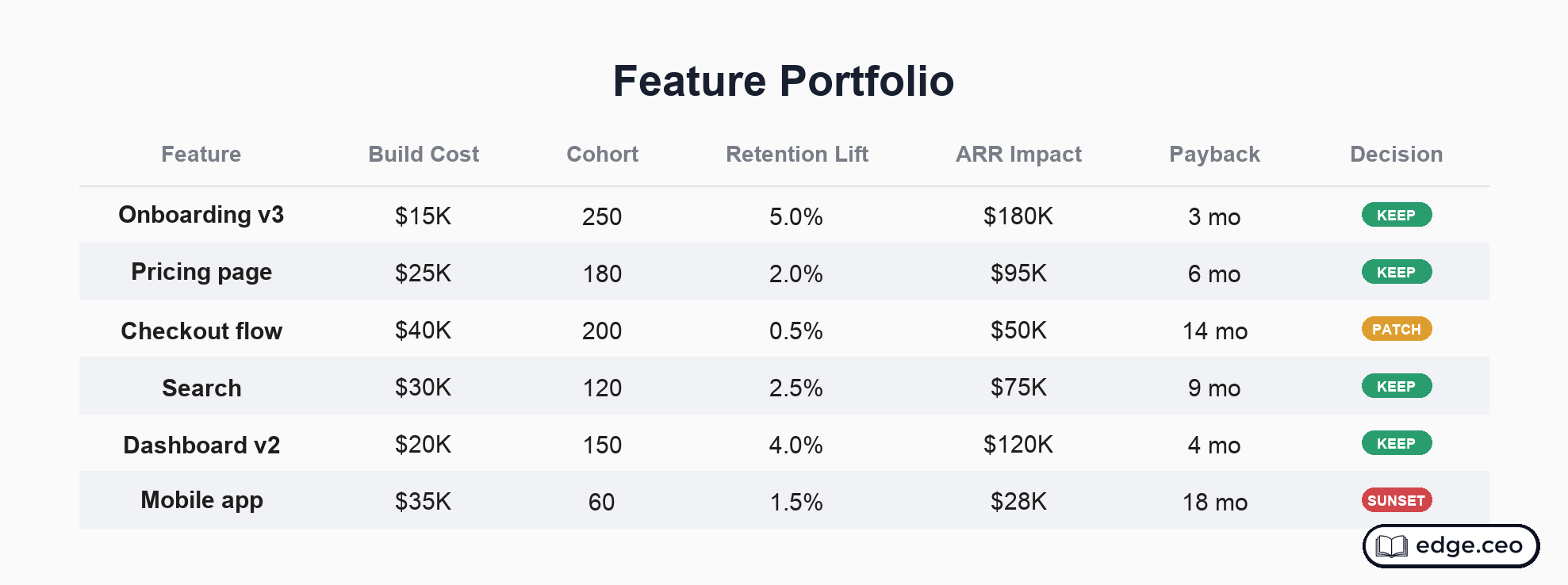
The cadence changes too. Roadmap reviews used to happen once a quarter. Now they happen every week, and each recently shipped feature gets checked against its build-cost budget.
Marketing made this move a decade ago. Attribution turned CAC from a vibe into a number, and the early adopters ran circles around the agencies still charging flat retainers. The factory just did the same for software. Every feature now has a price. The companies that treat their product as a portfolio will pull ahead of the ones that do not.
Software has a CAC now.